Issue 136
Term 1, 2026
Behind the spotlight: designing new library spaces
Following on from the article on Monmia Primary School’s library renewal, architect Christopher Peck shares how thoughtful design can turn any library into a space that strengthens learning, connection and community.
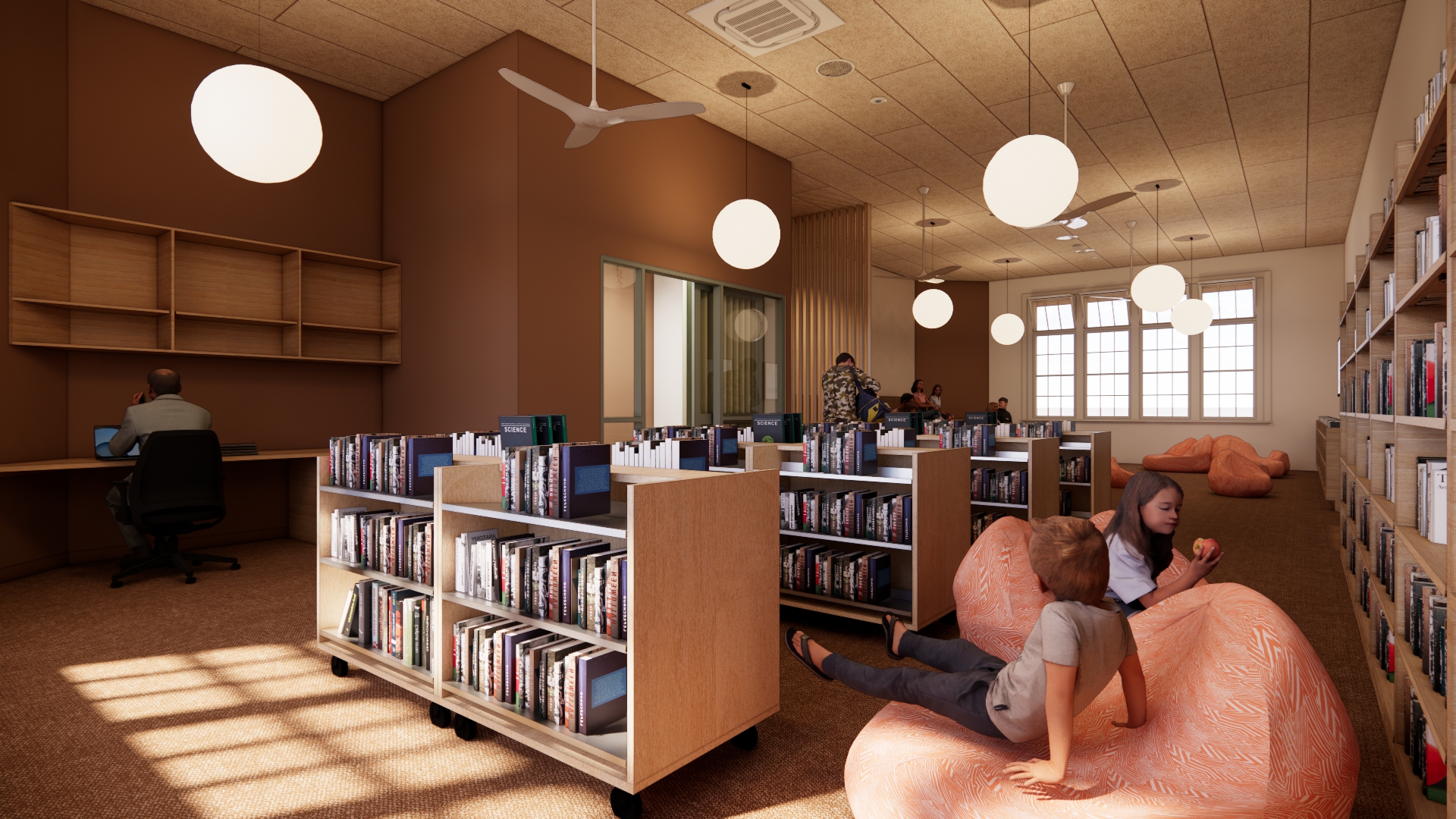
Before anyone even enters a library, before the books are even on the shelf, a process that shapes the way education happens in that space has already taken place. Specialist architects consider how students learn, collaborate, feel, access, use and respond to spaces in order to make design choices that will work for your school community now, and into the future.
Chris Peck is an architect from AOA Christopher Peck who has helped many schools design or reimagine their libraries. Here, Chris helps us better understand how thoughtful design turns a building into a bespoke, purpose built space for learning.
What are the main things an architect might consider when designing or renewing a school library space while also balancing competing priorities in an educational landscape?
According to Dianing (2025), physical layout and organisation, green spaces and nature, and lighting and acoustics were the leading influences on students’ (self assessed) engagement in the library. Stewart (2018) emphasises that diverse and flexible spaces are essential to cater for students’ differing social and cognitive needs. Let’s see if the academics and the architects agree!
Community consultation
“The design work in the first phase is to step right back to a master plan and work out how the library sits within the overall campus"
When starting work with a school, Chris says library design is a holistic process that takes into account the overall physical and philosophical choices and features of that community. Architects will want to workshop where the library is placed in the school, how the space is special to the school, and how they want it to operate. Often school staff will have been to other libraries and seen features they would like to incorporate into their own space. Key to the planning of a new library is early consultation with school staff, students and the greater community to optimise the layout and identify unique features to be included. Top features that are desirable right now in school library design include the following.
-
Flexible learning spaces that allow collaboration, small group and individual work; and furniture with wheels so it can be moved when the space is used for different purposes.
-
Small amphitheatres or gathering spaces for groups to read together, or for guest speaking events; and withdrawal spaces such as small cubbies for individual or paired student breakaway reading.
-
Indoor outdoor flow ensuring connectivity between indoor and outdoor spaces; and even the possibility of including an outdoor space as part of the library.
-
Murals: especially ones that reflect the makeup of the school community — often co created with students and other community members.
-
Pin boards to allow changing library displays of themes and student artwork.
Site features and constraints
“Sometimes it’s not a new library, it’s the refurbishment of existing buildings, such as Thornbury Primary School, which result in the most interesting spaces. We consider where the existing doors, windows and circulation spaces are. Where’s the best access to natural light? What is the acoustic performance of the space? How do we merge existing and improved view lines with how they want the spaces to work.”
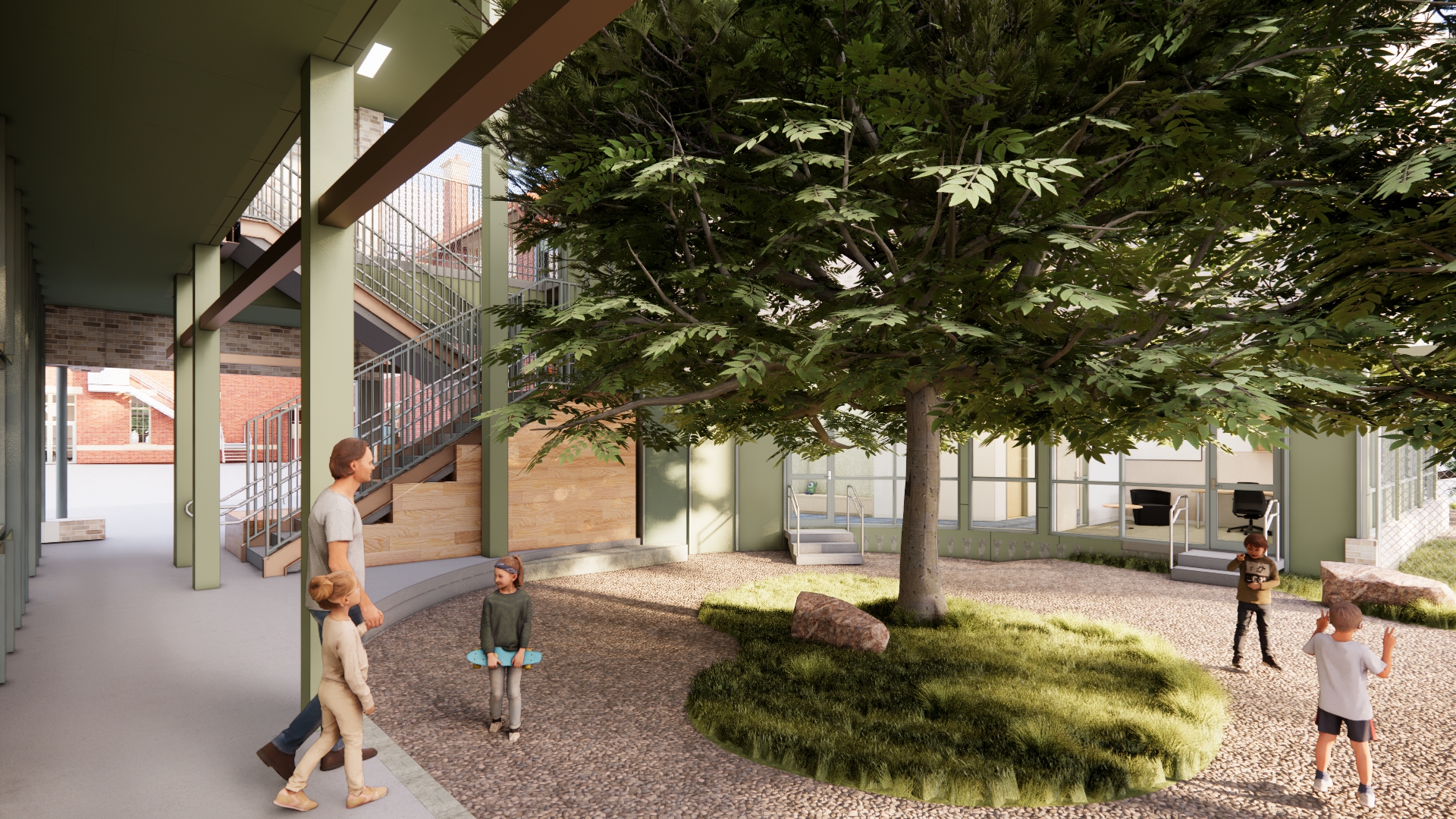
Render of an exterior - school courtyard design
When designing a new library build, Chris says that thinking about how the building connects with, wraps around, or speaks to, external elements such as trees and other landscape elements is really important — but existing buildings can have special features that are great to use as well. At Monmia Primary School library, an existing space needed refreshing within a tight budget.
There were two rather annoying columns right in the middle of the room that stuck out, and appeared at first to be a hindrance. The architects’ response to this was to design a story tree around one of them, with seating for around ten children, and to make the other one into a giant crayon! So, something that originally seemed like a hindrance turned into a playful and practical feature of the library.
Inclusivity and respect
When beginning a project, architects do a “deep dive” into the makeup of the student body, to learn about additional needs, cultural backgrounds, language, so they can respond with their designs. Acoustics are incredibly important in libraries. It is crucial to make sure this is dealt with not just in the ceiling but throughout the library, to reduce reverberation as much as possible. Ensuring there are spaces for different types of learning needs — quiet or collaborative — is central to designs.
Chris says that his company includes local Indigenous consultants in meetings so that cultural respect and understanding is a consideration in the design from the very beginning, rather than a token add on at the end. A great example of this is the Clifton Creek school library, which was rebuilt after the 2020 bushfires. The project used local sand to make rammed earth walls, a choice that reflects a commitment to local materials, energy efficiency, and deep connection to Country. The graphics from the shields of the five local Indigenous clans were then imprinted on the external walls — forever connecting the building to Country and its original custodians.
Another holistic approach to including the whole community in the project is evident in the Thornbury Primary school build and renovation, where the school invited an ex student who is now an artist to return and conduct a smoking ceremony with the students. After this, they gathered the ashes from the smoking ceremony and mixed them into a paint. The children collected native plants and with these materials created artwork which was then used in graphic patterns on the carpet and pinboards throughout the school. Involving the students and locals in this way from start to finish, and integrating the school’s story, values and connection to Country, allows ownership, links and investment from the whole community.
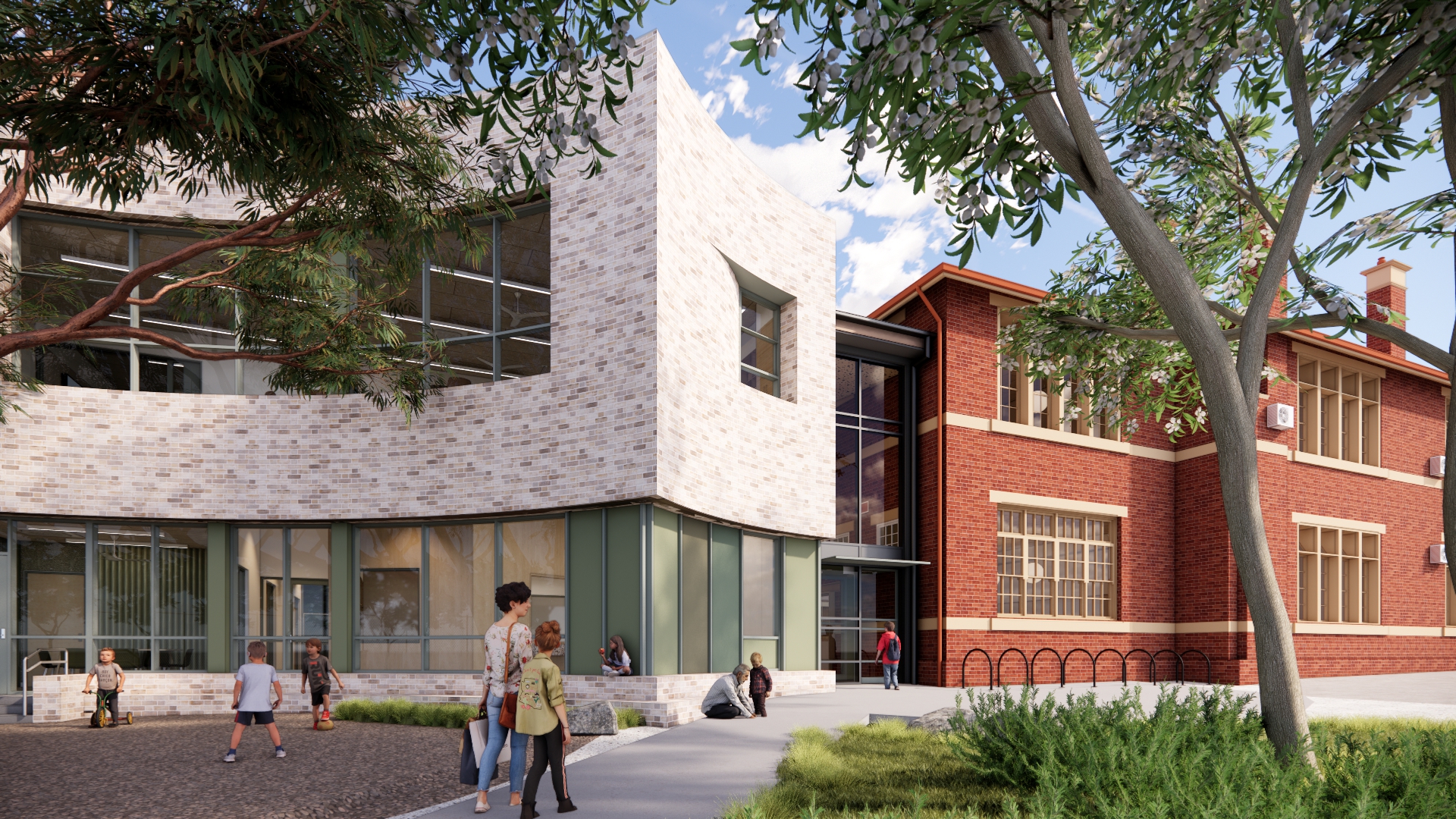
Exterior render of Thornbury primary school
Sustainability and future proofing
“… you need to enable enough flexibility should the education philosophy change over time, permitting these spaces to be used differently.”
Ensuring that the library is fit for purpose not only for its current custodians, but for future cohorts and approaches to education, is extremely important, especially for state schools with government investment — hence the emphasis on flexibility. But future proofing also means incorporating sustainable principles in every aspect of a project, from the design to the fit out. The orientation of a new library space, to allow light, optimal sun exposure and natural ventilation is key. Insulation, building materials and glazing are chosen to minimise the energy required to run the space. Architects and designers also take into account the maintenance of spaces into the future. This includes small things like choosing carpet tiles, where you can replace just a section of carpet if needed, instead of ripping up the whole lot; or choosing durable, weather resistant materials that are built to last, not just to look good for the first year.
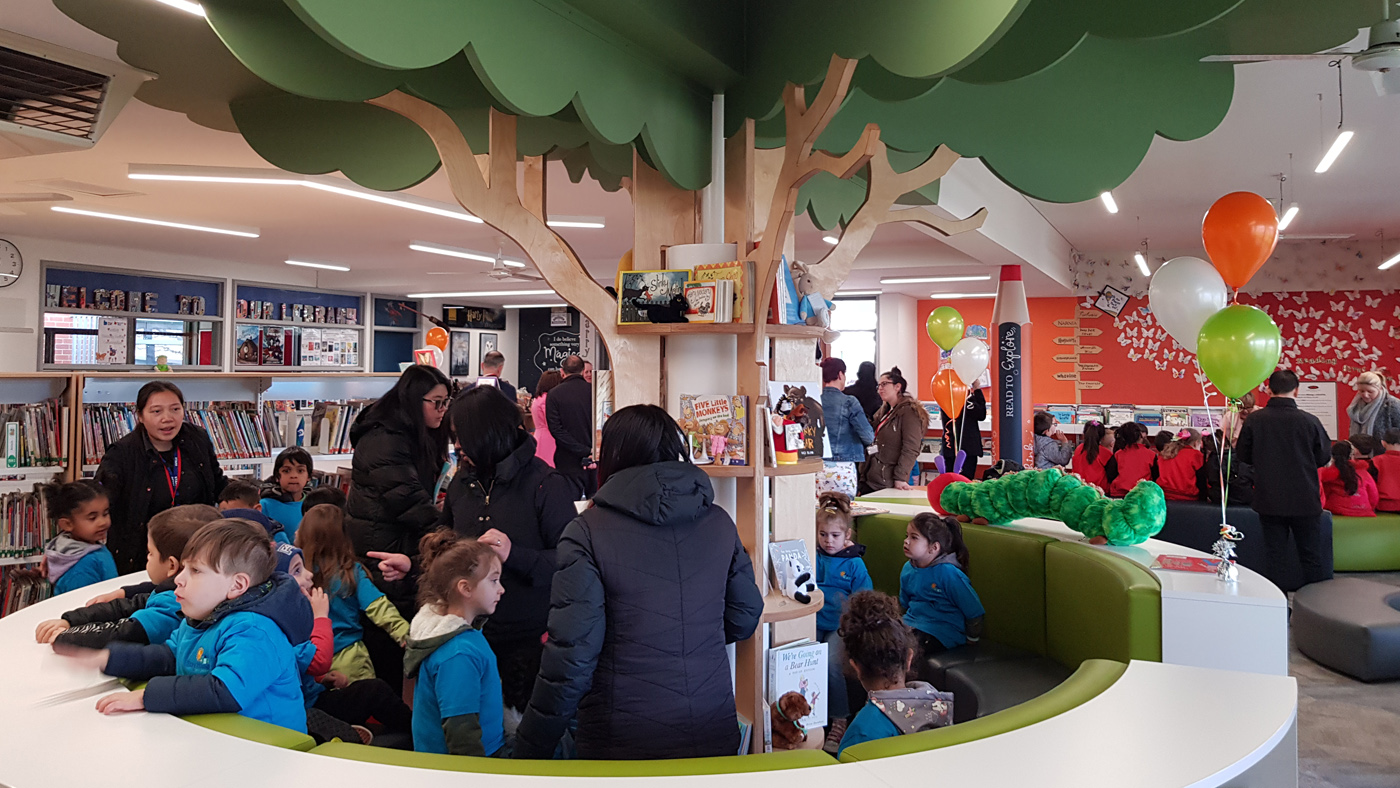
Students enjoying a new library
Students’ learning success is linked with the design of learning spaces (Zhang, 2024), and experienced architects and designers take into account all of these factors, and more, to enable innovative, inclusive and sustainable library designs.
References
AOA Christopher Peck. (2025, November 24). AOA Christopher Peck. Retrieved from AOA Christopher Peck: aoa-cp.com
Dianing, P. J. (2025). Library design and academic performance: implications on students’ engagement. International journal of current science research and review, 2251–2262.
Marrone, R. (2024). The relationship between well being and academic achievement: a comprehensive cross sectional analysis of system wide data from 2016–2019. Journal of learning analytics, 123–141.
Stewart, P. (2018). School library design, facilities and resources for sustainable cognitive and social development for students: an evaluative case study. School libraries worldwide, 30–45.
Zhang, M. (2024). The relationship between teaching space design and learning outcomes. Journal of Literature and Art Studies, 944–947.

Christopher Peck
Director
Art of Architecture (AOA) Christopher Peck