Issue 139
Term 4, 2026
School library spotlight: Book Week at St Paul’s School, Queensland
At St Paul’s School Junior Library, Book Week is not just about costumes and a parade. We spoke with Janelle Hamling (Junior School Teacher Librarian) about how she and her team use Book Week to foster reading, belonging and lifelong learning throughout the whole school community.
Term 3 at St Paul’s School is called ‘Book Week Term’. The school’s celebration of books and literacy continues beyond the traditional parade and beyond the library itself. It’s a celebration of community and connection through story, and a compelling and powerful illustration of how a library can function as the wellbeing centre of a school.
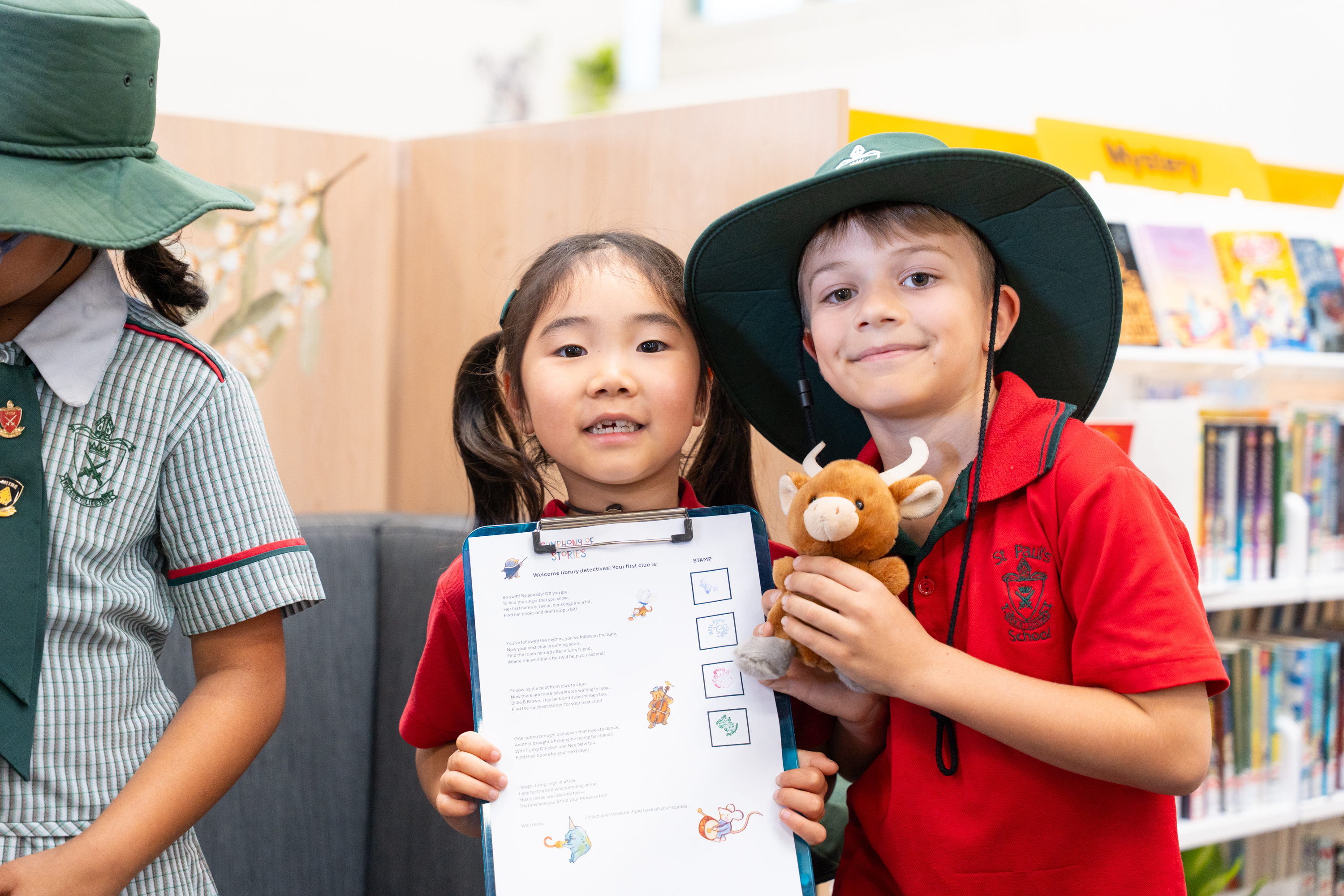
Connection, inclusion and belonging are nurtured in the library, with benefits that reach across the entire school community. Each year, Janelle Hamling and her team work on events to tie in with the CBCA Book Week theme. For this year’s theme, ‘Symphony of Stories’, a book parade was first on the agenda, followed by music and activities, participation from students, parents and staff, and of course, plenty of motivational chocolate for the hardworking library staff.
Connection
Students attend library lessons once a week, but the library is also a space open to parents and community members. It is often busy before and after school, with children and their adults spending time together.
Janelle says, ‘We have a huge turn-up of parents and students in the morning that come in, and they read together and they play games and they build things … For parents, it’s a time for them to switch off phones and to just be with their child.’
The library is also a place where parents are encouraged to connect with each other. ‘It’s a lovely place for parents to meet other parents and that very much happens. Particularly if they’re new parents, I always say to them, come and spend some time in the library in the morning and get to know some other parents.’
Connection happens all through the year in the library, but Book Week provides a focus to promote it.
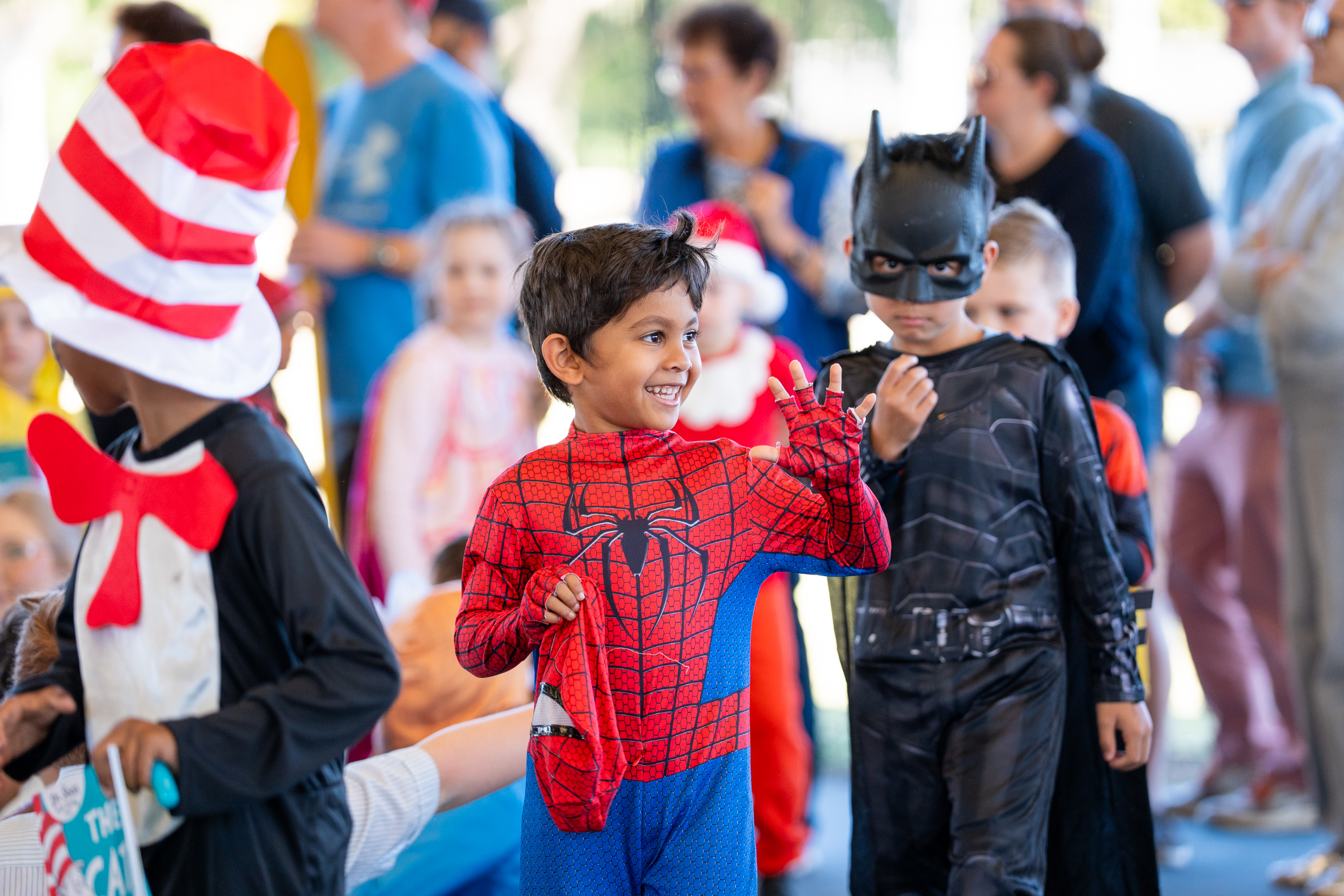
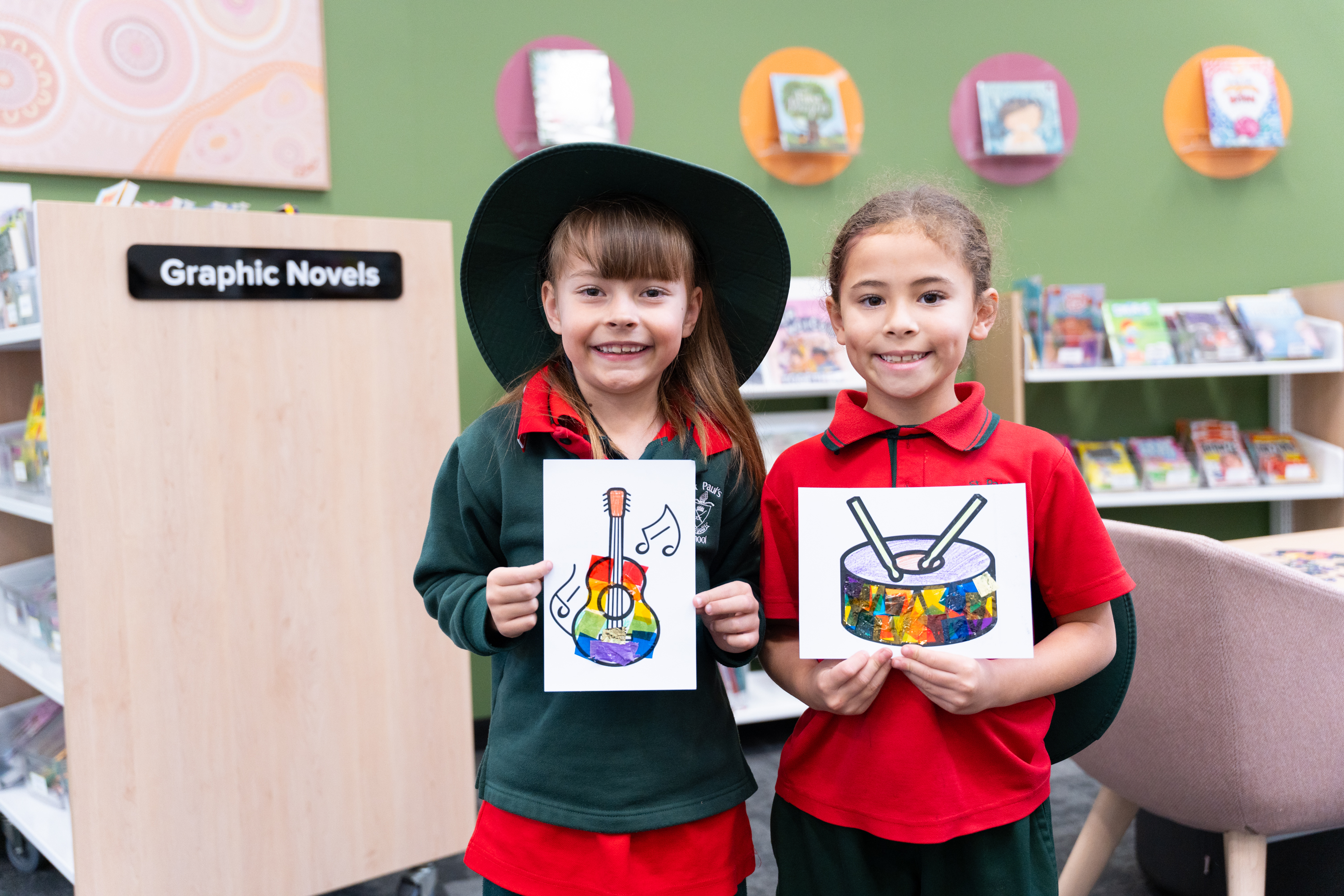
For ‘Symphony of Stories’, the parade featured performances from both the junior choir and senior (high school) singers, along with a retelling of Pamela Allen’s Bertie and the Bear. Staff performed the parts of Bertie and the bear, and senior school students played the instrumentalists who were chasing the bear. The parade was followed by a community singalong, where parents, staff and students sang a round called ‘The instrument song’. Students of different ages were then paired together to participate in activities around the shortlisted books.
Parents participated in different aspects of the celebration and all the staff in the Junior School, including leadership, teachers and support staff, dressed up. Not only do all the staff wear costumes, but they coordinate a theme! This year their costumes were inspired by the shortlisted book The thing about Christmas. Some teachers were dressed as reindeer, and others wore terrible Christmas jumpers or a more traditional Claus-themed outfit.
This level of buy-in from all parts of the school community illustrates community connection at its peak.
Inclusion
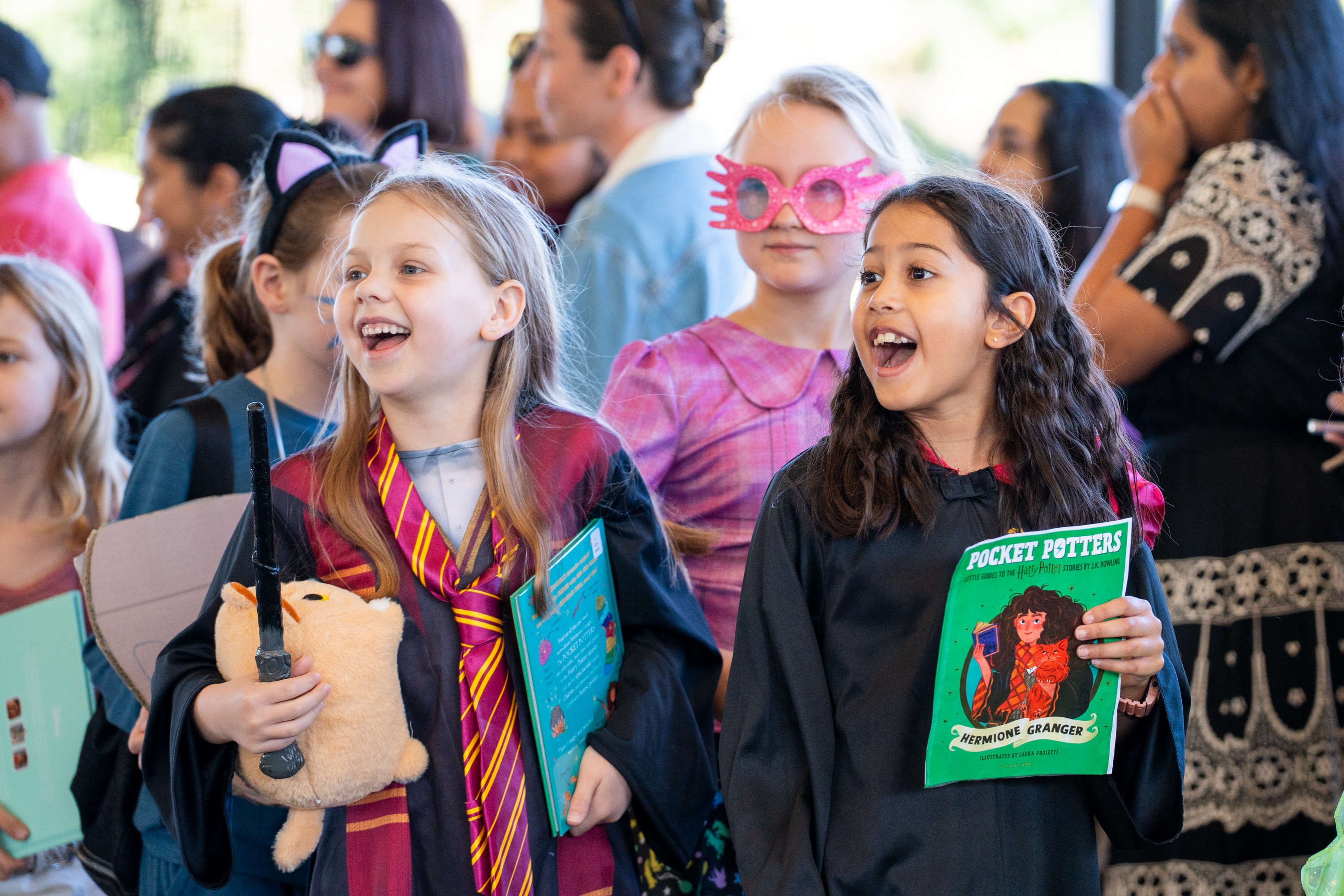
There are no rules about costumes at St Paul’s Book Week celebration. Instead, careful preparation and planning ensure imagination is given a chance to flourish, and store-bought costumes and superhero outfits are minimal. Parents are given a ‘heads up’ about the theme before the June school holidays. Students are also given time in class to think about their favourite book and how their costume might be constructed. Reducing the last minute pressure over costumes increases opportunities for inclusion. So does expanding the ideas around which stories your costume may come from.
Janelle explains, ‘I say to them, if you want to write a story, and dress up as your character in the story that you’ve written – that’s awesome. And we would be happy to put your book in the library too, because it’s valuable … we do have quite a few student-written books in the library with the reference sticker on, which the kids are very proud of.’
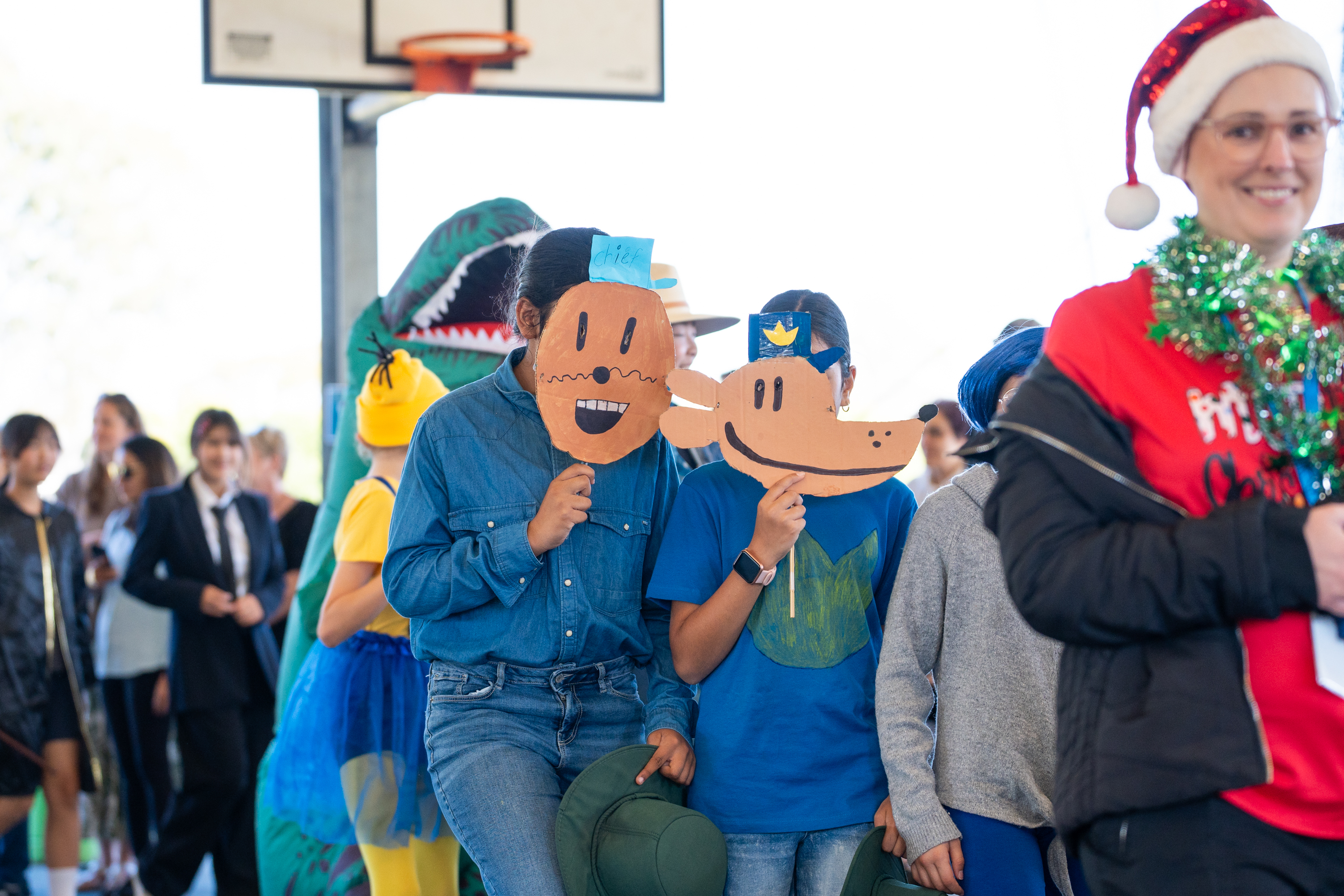
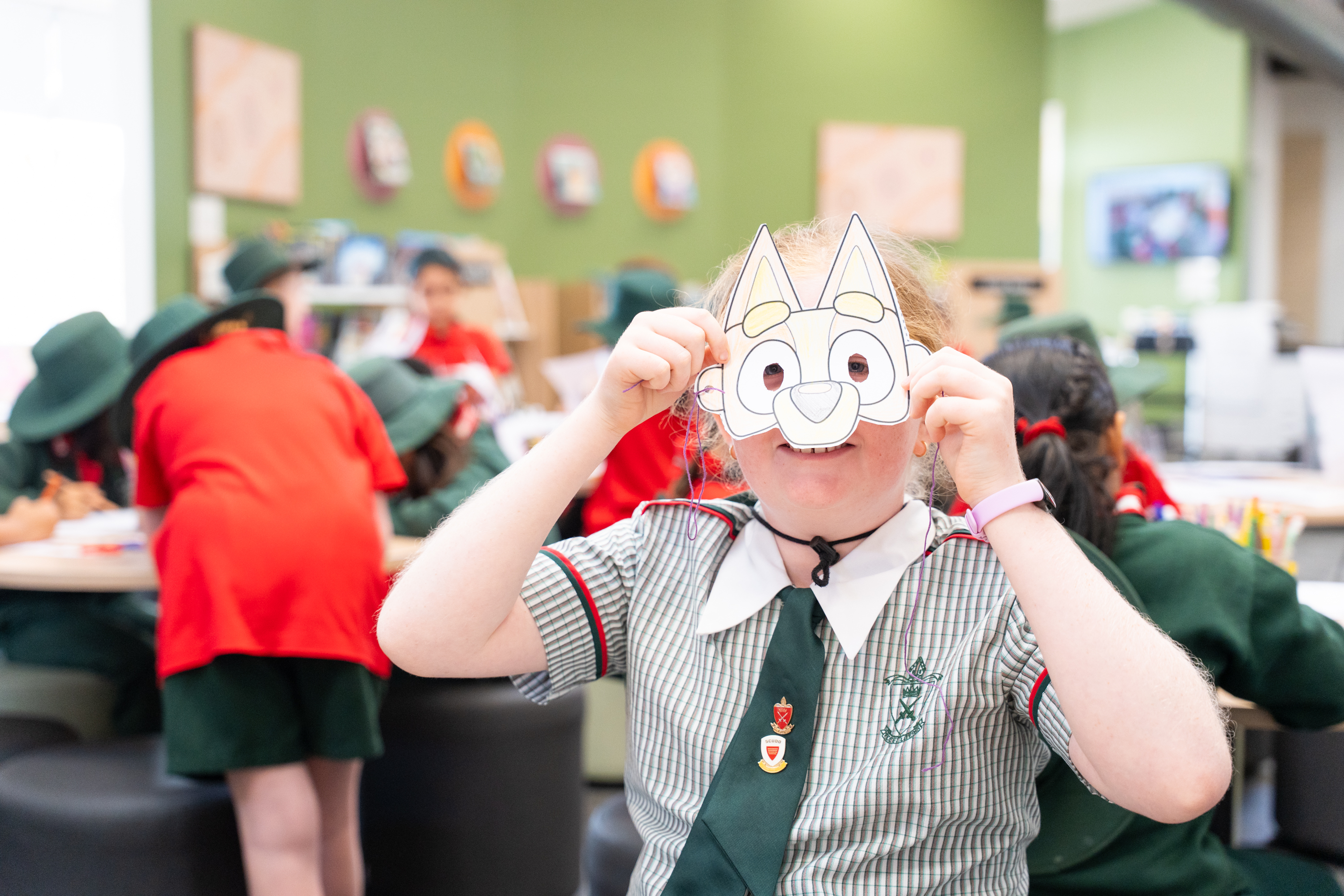
Students can even make the costume at school. Each year, Janelle reads a favourite book to students before Book Week. There’s no such book is about a girl and her mother brainstorming Book Week costume ideas and needing to come up with a story that goes with the costume because there is no such book – yet! After Janelle reads this book, the students make masks. If they wish, they can write the story that goes with their mask and use the mask as their Book Week costume.
Janelle observes, ‘Sometimes [wearing the mask they made in class to the parade] is even more special because it actually means that they’ve transferred what they’ve done in library to something else.’
Small changes like these, in the way students are taught to think about story and expression, ensure diversity is embraced and inclusion is expanded.
When people feel connected, included and valued in a space, a sense of belonging can develop. From that foundation, knowledge synthesis and a lifelong love of learning can blossom.
Belonging
A school library often represents a place in the school that’s neutral. It’s a space that’s not home, work or the classroom. Janelle has fostered just such a ‘third space’ for students, parents and the community. It’s a safe place where both quiet and, at times, boisterous activities can occur. It’s also a social place where students and parents can meet and interact.
Janelle says the huge turnout of parents in the morning, reading and playing together, contributes to overall school belonging. She notes, ‘I think they get the sense that this is a welcoming place … it’s that third space … it’s affirming for us to be that safe, special place for [students] and their parents.’ Providing a welcoming space in the school that’s inclusive and accessible to the whole community is a powerful foundation for creating genuine belonging for everyone.
Synthesis
If the school community were a symphony orchestra, St Paul’s Junior School Library would be the music score. It’s the place where all the parts for the different instruments – the learning strands – come together.
The library team liaise with the teaching team to link the library with curriculum. During Book Week, they create thematic opportunities, linking curriculum strongly with reading, literature and the library. This year, the library team worked closely with the music faculty to develop activities for ‘Symphony of Stories’. In other years, connections with other curriculum areas have been forged. Likewise, community members are encouraged to share their knowledge and experiences, as when a First Nations staff member contributed an Acknowledgement of Country at the Book Week parade, which she tied back to storytelling and traditional knowledge.
Janelle and her team in the library work extremely hard to provide space, time and resources for learners to connect what is learnt in the classroom with their own world view and the perspectives of others. When people feel connected, included and valued in a space, a sense of belonging can develop. From that foundation, knowledge synthesis and a lifelong love of learning can blossom. A symphony of stories, indeed.

Ceinwen Jones
Editorial and Professional Learning Lead, SCIS
Education Services Australia