Issue 137
Term 2, 2026
Stereotypes and the mythology of race: legacy thinking that keeps us divided
A conversation with Dr Jared Thomas, Nukunu person of the Southern Flinders Ranges and children’s author.
We respectfully caution Aboriginal and Torres Strait Islander readers that this article may contain images of people who have passed away.
If we’re talking about similarities and differences between people, and categories we can put them in, I fall in to the ‘not very good on the telephone’ category. Even though I grew up with a phone book full of my friends’ and relatives’ landline numbers, a phone call to me now is a scripted and prepared event, and the result of an undue amount of overthinking!
But Jared Thomas is the opposite: obviously used to picking up the phone and having a chat, he suggested we talk during his work commute, when he had an uninterrupted 45 minutes. And sure enough, there was no awkward small talk! We dived straight into the big issues in a totally natural and thoughtful way. Here are the insights and thoughts Jared shared with me at the start of his working day a few weeks ago.
On race
The concept of race, and the use of it to divide and hierarchically organise societies based on physical or circumstantial differences between people, began in the late 16th century (Smedley, 2026). Contemporary scientists now agree, however, that human physical variations should be understood as environmental adaptations, rather than fundamental genetic differences.
‘Race is a political and social construct that is fluid. Racial categorization can change over time, place, and context. Race has been used historically to establish a social hierarchy, whereby individuals are treated differently resulting in racism.’ (Bonham, 2026)
Jared explained to me the long-ranging and deep effect of this type of thinking on Australian society – not in the way that colonising Australians think about Aboriginal and Torres Strait Islander peoples, but in the way the Aboriginal and Torres Strait Islander peoples think about themselves.
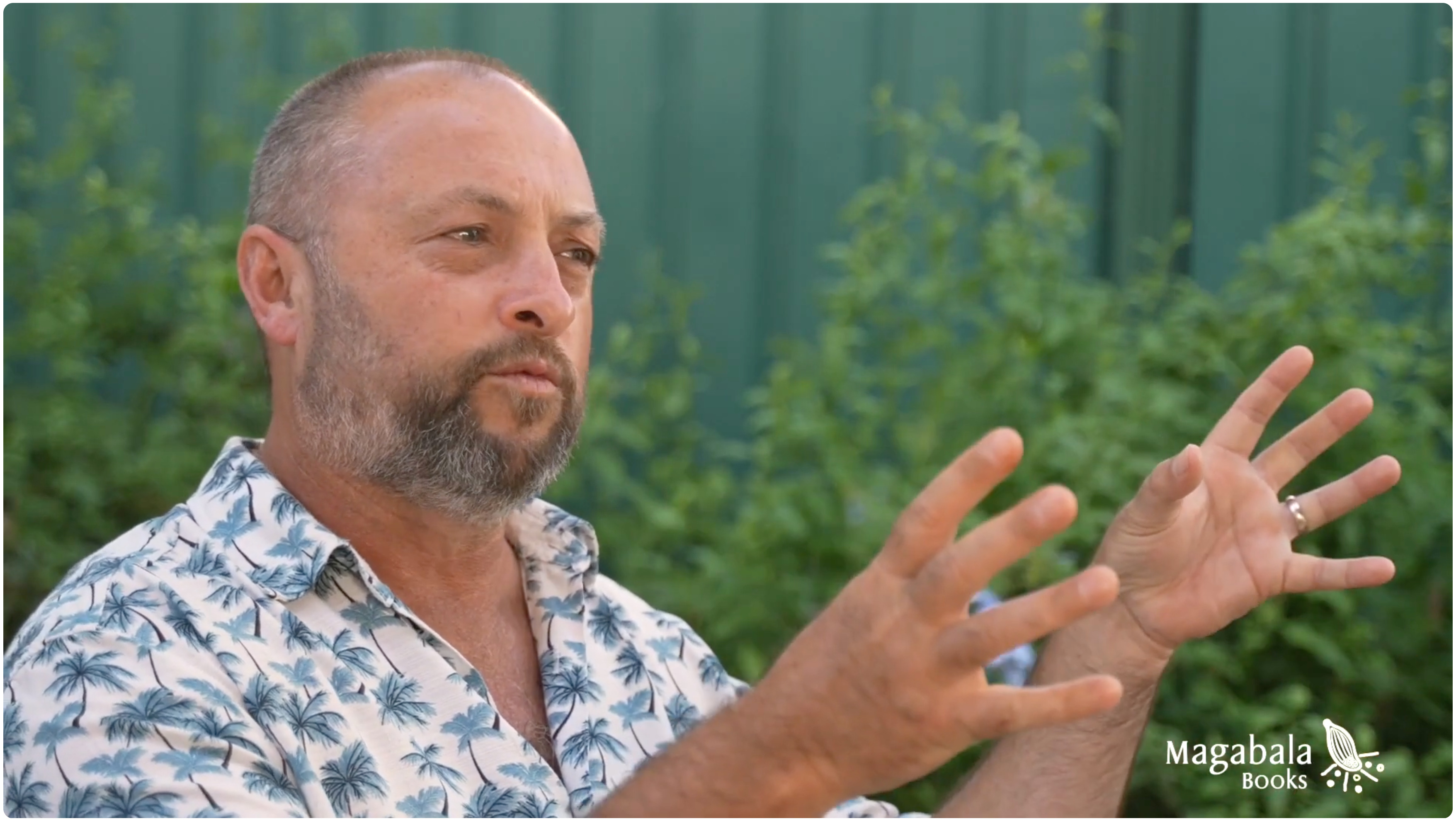

Still images from Jared Thomas’ video introduction to Uncle XBox magabala.com/products/uncle-xbox. Reproduced with permission.
“[from the time of the colonisation of Australia], there was a whole lot of biological determinist understandings placed on Aboriginal people. So some of the thinking is that Aboriginal people are just naturally inherently violent, uncivilised … unintelligent … These were the dominant types of thinking … [and] a lot of the early writing about Aboriginal and Torres Strait Islander people and [indigenous] people around the world is based on all of these false assumptions; not only non-indigenous people but even indigenous people ourselves.”
These assumptions lead to stereotypes about people – both in the negative and positive sense. For First Nations Australians, a dominant negative narrative is that First Nations people are not good at maths or literature; and a positive narrative is that they are good at sport and art. The reality is that there are Aboriginal and Torres Strait Islander doctors, lawyers, engineers, footballers, librarians, teachers, politicians, authors … so varied representations of First Nations peoples, reflecting the reality, is appropriate and important. And that should be reflected in library collections too.
On authorial intent
“What I’m trying to do is show … the sophistication of our culture and the commonality between us. I’m trying to show you our humanity. And that Aboriginal culture is a very collective culture rather than individualistic. I want to challenge myths around Aboriginal people [and show] three-dimensional characters, not stereotypes … or if there are stereotypes, making sure they’re explained and contextualised.”
In this sense, depiction of diverse characters is not just about Aboriginal and Torres Strait Islander people seeing themselves in stories, but about them seeing themselves, and non-Aboriginal and non-Torres Strait Islanders seeing themselves, all within the context of society as a whole. Jared emphasises that it is the role of school library staff to ensure collections are diverse and representative, and there are plenty of resources available to enable this. It’s the author’s responsibility to ensure integrity in representation, by consulting with the appropriate community and involving the relevant people in the research and writing of the work. But the work of publishers is also important. ‘There’s such a proliferation of Aboriginal children’s authors and fantastic publishers like Magabala Books that dedicate all of their time to producing the best quality Aboriginal children’s material that they can, and for young adults … the publishers are now working with real intent to produce quality work that has integrity – it’s about trying to populate your collection with those works.’
On labels, content warnings and decolonisation of the school library
Jared has the following advice for library staff assessing their collection – especially in terms of Aboriginal and Torres Strait Islander content. Staff should consider the following.
- Is the resource accurate?
- Does it have sensitivities?
- Is it misrepresentative or defamatory?
- Is the author an Aboriginal or Torres Strait Islander?
-
- If yes, are they speaking for themselves and their people, or for another Aboriginal or Torres Strait Islander group?
- If not, are they a non-indigenous person speaking on behalf of First Nations people?
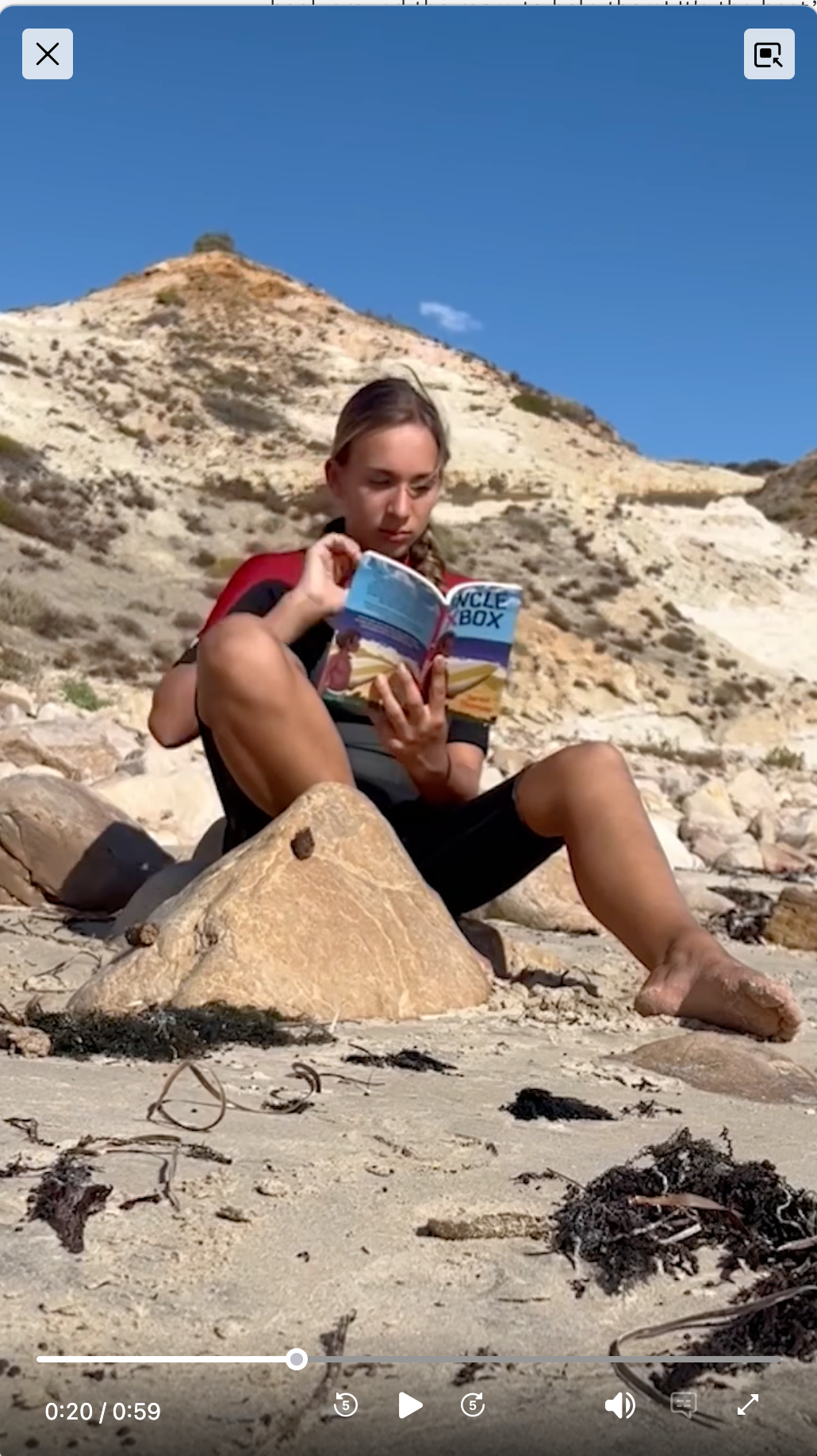
Still images from Jared Thomas’ video introduction to Uncle XBox magabala.com/products/uncle-xbox. Reproduced with permission.
When Jared speaks about decolonisation, he’s very concerned that we do not erase history. ‘I think in terms of … decolonisation … it’s not just about complete removing [of resources from school libraries]’. Materials may contain offensive ideas and language, but it’s important for people to understand that past policies, media representation and the discourse around people’s kitchen tables all led to poor treatment of First Nations peoples historically, over time and into the present.
There should be a warning that prepares the reader for what they’re going to look at, so that they understand the cultural context and engage with it critically. ‘It’s very important to be aware of what you have in your collection and make sure that … if it needs a label, it’s got a label. And if it doesn’t have a label, maybe you need to set it aside until you give it a label.’
Our conversation ended as Jared drew close to the end of his journey, but not before he had emphasised his investment in continuing the conversation. By ensuring that our school libraries contain diverse and varied resources that depict the nuances and realities of modern life, school library staff can also continue
References
Bonham, V. L. (2026, March). Race. National Human Genome Research Institute. genome.gov/genetics-glossary/Race
Smedley, A. (2026, March). The history of the idea of race. Britannica. britannica.com/topic/race-human/The-history-of-the-idea-of-race

Dr Jared Thomas
Author and Research Fellow
Aboriginal and Torres Strait Islander Material Culture and Art, South Australian Museum.