Issue 137
Term 2, 2026
Tui Raven – from guerilla cataloguing to inclusive cataloguing
Tui Raven discusses the past, present and future of reparative collection description in Australia.
The abiding message of Tui Raven’s Guidelines for First Nations Collection Description is that the words we use are important. They’re important on the surface level because we want to be able to find things and we need to use language that is instinctive and intuitive and that people recognise. But words also have a historical legacy and an influence, politically, socially and collectively. There’s a real responsibility when a library catalogue names an authorised term for something: when library users go to a library catalogue and see that a particular term is being used, the assumption is that it’s the officially accepted term.
Tui Raven’s Guidelines for First Nations Collection Description was published in 2023 and quickly became a seminal reference document for library professionals wanting to ensure First Nations materials – from archival ephemera in museum collections, to books on school library shelves – are accessible and discoverable. Raven’s interest in catalogue description grew out of her starting a PhD, enquiring about how Noongar cultural items were described in Wester Australian collections.
After studying fine arts and linguistics, focusing on Indigenous languages, Raven became a project officer for Indigenous literacy at the State Library of Western Australia. Raven then went onto become the Project Coordinator for the From Another View project where she quickly realised, when working with archives, that it was difficult to find what was needed. ‘We actually had to go and pick the boxes out and have a look through them [to know what they contained] … and we were also finding that there were things within books that might have contained Aboriginal languages or culture heritage … but it wasn’t on the catalogue record. There was no way of notifying [the researcher] that a particular group was mentioned in a book.’
Before all of this, Raven admits that as a high school student she ‘did a bit of guerilla editing, as I called it, because there were books that had words in them that were just inappropriate, all the descriptions were inappropriate … So I just went through with a pencil, and … wrote a comment … and at the time I wanted the book removed, but now I wouldn’t actually remove the book at all.
I would actually put a statement now … to say that [our library] contains historical collections that were reflective of the practices and thinking at that time.’
Raven faced a number of challenges when developing the Guidelines: learning about collection description and MARC 21 without having a library background; creating one set of guidelines that groups over 200 language groups into one entity; and ensuring that the Guidelines were usable for a wide range of purposes, both now and into the future. Raven also highlights the problematic nature of describing cultural resources using a different culture’s framework. ‘Studying linguistics is studying the metalanguage of language. And when you look at library systems, that’s the metalanguage of information systems … I can see the similarity between them … [but also] the difference between how things are being described from a linguistic language point of view as opposed to an information system which in libraries is based on Western concepts of knowledge.’
Raven illustrates this with the example of the magpie (Koolbardi).
“As a Noongar person … I think about the Koolbardi in terms of seasons, not in terms of other birds. The Koolbardi is the bird that sings in the season and closes out the season. So you know the seasons are changing and you know it’s going to get warmer or cooler because the birds have come out … so when the Koolbardis start to sing, the weather’s about to change. And by weather I mean season … and so I would probably catalogue the Koolbardi a very different way [that is, in relationship with the seasons] than, say, someone who’s looking at a Western biological framework or taxonomy.”
Authorship is another point of cultural dissonance. ‘The way that we think about authorship and ownership in library systems is different to the way that we think about authorship in an Indigenous knowledge system.’ Where an Indigenous person has shared their knowledge with a researcher, in Western library systems, the researcher would be named as the publisher, and the Indigenous person may be named as a contributor or not named at all. In an Indigenous knowledge system, the Indigenous person would be the author and the researcher would be the contributor. Raven points out that language offers clues and insights into the time period of works, and the people who used them.
“I’m of my era: I sometimes say ‘Indigenous’ and I sometimes say “Aboriginal”, but I know older [Indigenous] people who use the word Aborigine … they’re of their era and so they should be allowed to use it in their own self-determined way.”
She believes we should keep those older terminologies in collections as a way of signposting the era they’re from.
For school libraries, Raven emphasises that referring to the AIATSIS codes for language groups enables library staff to recognise which Aboriginal and Torres Strait Islander languages and peoples are represented in their collections, whether their local community is represented and if there are gaps. She recommends that collections be audited to see what needs to be edited, what needs labelling and how the materials can be organised in a way that is accessible for everyone. If possible, Australian First Nations materials should be contextualised with materials about Indigenous peoples from other parts of the world.
Following the release of the Guidelines, Raven is particularly proud of the establishment of the Reparative Description Community of Practice, which currently has around 150 members and is an opportunity to discuss what reparative description for First Nations collections looks like at a large scale. She is also proud of the inclusion of Indigenous cultural and intellectual property concepts and terms in the Guidelines, enabling a direct relationship between them for future developments in legal areas like patents and intellectual property.
Raven’s Guidelines formalise the commitment which began for her as a grassroots campaign in high school. Her framework assists cataloguers and library staff in their responsibility to use respectful and thoughtful language in describing their collections and reminds us that reparative cataloguing is an ongoing and collaborative process.
Further reading
Indigenous Archives Collective, Faulkhead, S., Thorpe, K., Sentence, N., Booker, L., & Barrowcliffe, R. (2023). Indigenous referencing guidance for Indigenous knowledges. Indigenous Archives Collective and the UTS Jumbunna Institute of Indigenous Education and Research. caval.edu.au/referencing-toolkit
Indigenous Archives Collective. (2026). Indigenous Archives Collective position statement on the right of reply to Indigenous knowledges and information held in archives. indigenousarchives.net/indigenous-archives-collective-position-statement-on-the-right-of-reply-to-indigenous-knowledges-and-information-held-in-archives/
Raven, T., National and State Libraries Australasia, Council of Australian University Libraries, Australian Institute of Aboriginal and Torres Strait Islander Studies, CAVAL Limited, et al. (2023). Guidelines for First Nations collection description. National and State Libraries Australasia, Deakin, Australian Capital Territory. nla.gov.au/nla.obj-3250767341/view
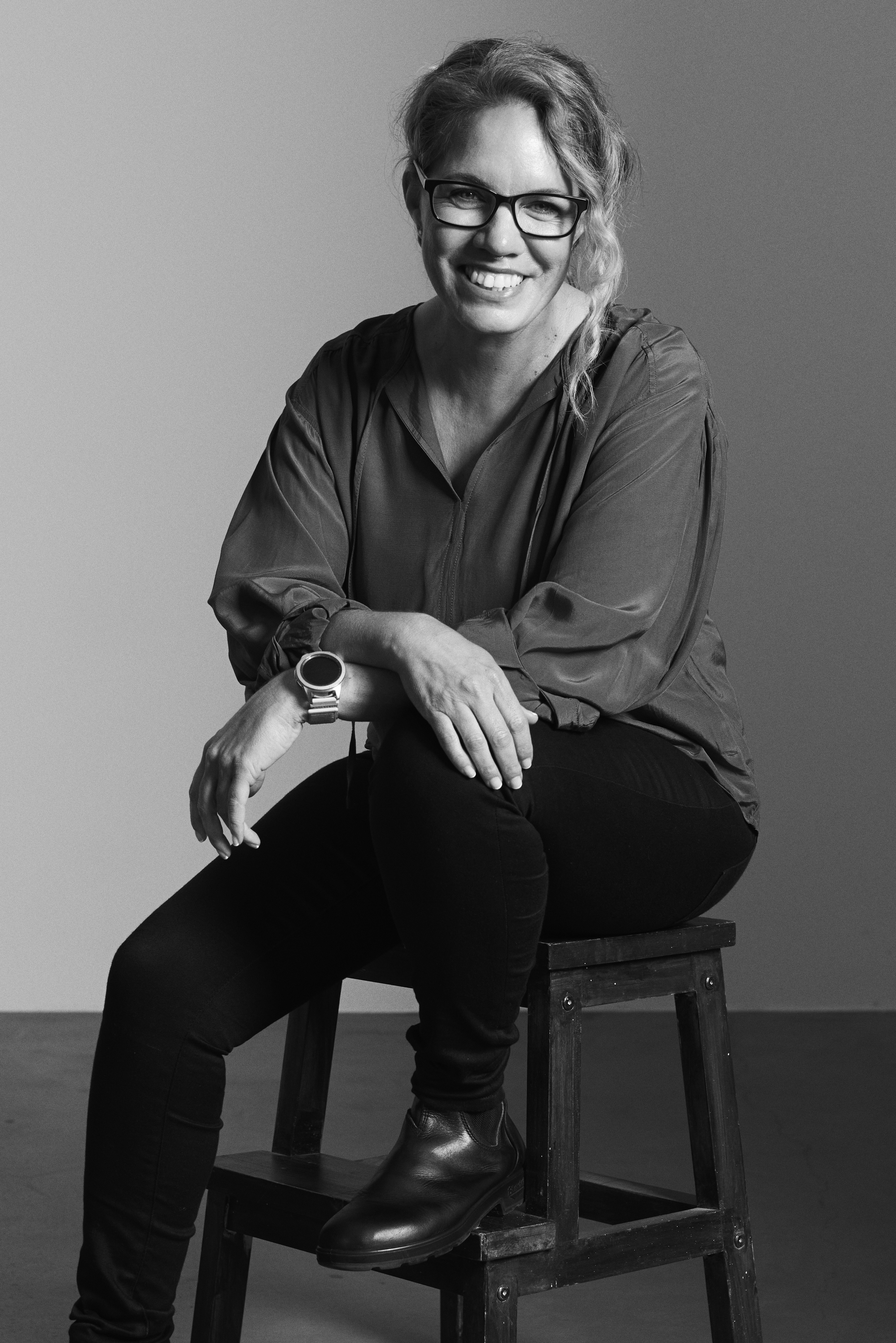
Tui Raven is Yamaji Nyungar based in Naarm/Melbourne, and is Senior Manager of Indigenous Programs at Deakin Library. Tui is a member of the ALIA Aboriginal and Torres Strait Islander Expert Group and of the IFLA Indigenous Matters Section. In 2023, she authored the Guidelines for First Nations Collections Description for the Australian library sector as a joint project with ALIA, AIATSIS, CAVAL & CAUL. Tui is also a co-founder of the Australian Reparative Description Community of Practice.