Issue 138
Term 3, 2026
The power or reading aloud: why it matters for every child, no matter their age
Reading aloud has benefits beyond those we already recognise in the early years. Serena Bourke explains the many secret bonuses of reading aloud, for primary- to secondary-aged students.
We all know the feeling, that special moment when reading aloud to a class takes hold; they are engaged, engrossed and just want to hear more of the story. It doesn’t matter if it is a kindergarten class being read to for the first time, or a Year 6 class being held in thrall by the latest mystery, clamouring at the end to be the first to borrow the novel; reading aloud is one of the most powerful literacy practices available to teacher librarians. In fact, it is one of the most powerful literacy practices available to the whole school and community.
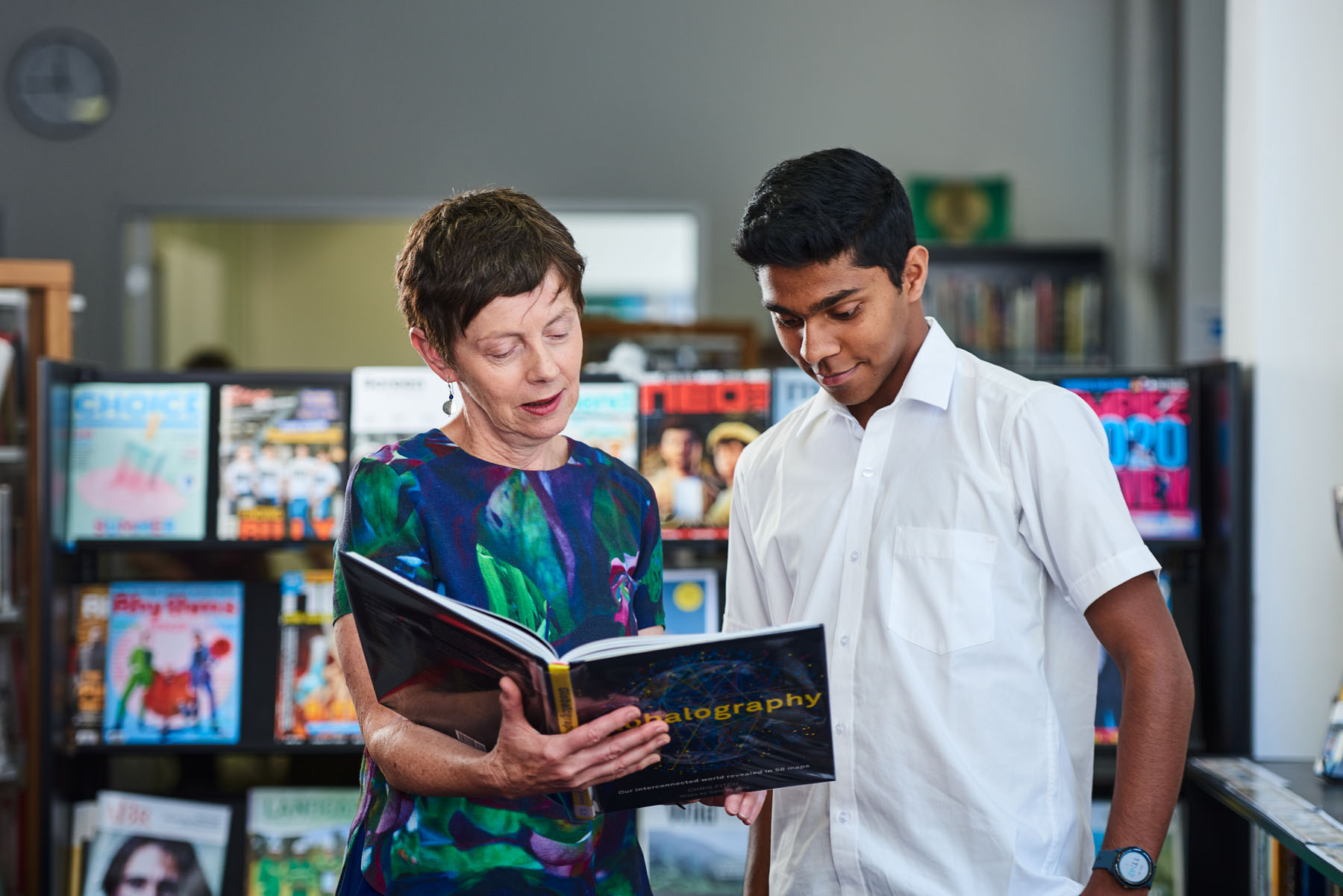
The benefits of reading aloud transcend age or reading ability. Current research consistently establishes that reading aloud to a child, no matter what their age, supports language development, comprehension, engagement with literature, and social– emotional learning (Fisher, Flood, Lapp, & Frey, 2004; Trelease, 2019). Reading aloud is not merely something ‘to do’, it is a fundamental component of literacy.
When discussing the benefits of reading aloud, the most significant one cannot be overlooked: the impact it has upon language and vocabulary development. Barone, Fougère, and Martel (2024) found that children who were read aloud to showed measurable improvement in their receptive vocabulary gains, which persisted even six months after the trial ended. They also noted that the benefits were quite strong for those from disadvantaged families, as well as boys. Written language is more complex than the spoken word. Exposure to new sentence structures and vocabulary builds a child’s own vocabulary and deepens their understanding of language and how it works. This in turn allows students to learn new grammar patterns, unfamiliar vocabulary and sophisticated ways of expressing new ideas (Beck & McKeown, 2001).
Australian literacy resources also highlight that reading with children allows them to encounter new concepts, ideas and cultural perspectives while learning how language communicates meaning in increasingly complex ways (Victorian Department of Education and Training, 2022). Within a library setting, it means that students who may struggle with reading independently can still engage in and be engulfed by rich language. This allows them to participate in class discussions about what they are reading and learning about without the added pressure of not being able to read that text in that moment.
Reading aloud is one way that we, as teacher librarians, can critically support and assist with a student’s comprehension. When a skilled reader models fluent reading, students learn how punctuation, expression, pacing and pausing can add to the meaning of a text. When a teacher librarian actively interacts with students while reading aloud – asking questions, getting students to predict what will happen next in the story, examining what motivates characters to make their choices – these conversations help develop deeper comprehension strategies, which are vital when reading and analysing more complex texts. Interactive reading not only allows a teacher librarian to gauge their students’ understanding, but also significantly improves students’ engagement with a text and improves their comprehension (Fisher et al., 2004). Reading aloud strategies, using the skills of predicting, questioning, analysing and summarising, can be seen in Australian classrooms every day and help students build the comprehension and thinking skills required for successful independent reading.
Other benefits of reading aloud include creating, building and fostering an innate love of reading. Many students find reading a daunting task. In the digital age we find ourselves in, it is so much simpler to ‘swipe’ rather than to read and comprehend – why wouldn’t a student choose the easier option? Not realising that this is a slippery slope, they may miss a key reading building block because of an ‘easier’ choice. Reading aloud provides a different experience, one that isn’t focused on word or sentence formation but enjoyment, imagination and shared storytelling, one of the oldest traditions in every culture.
Trelease (2019) states that ‘reading aloud is one of the most effective ways to create lifelong readers because it helps children associate books with pleasure rather than obligation’.
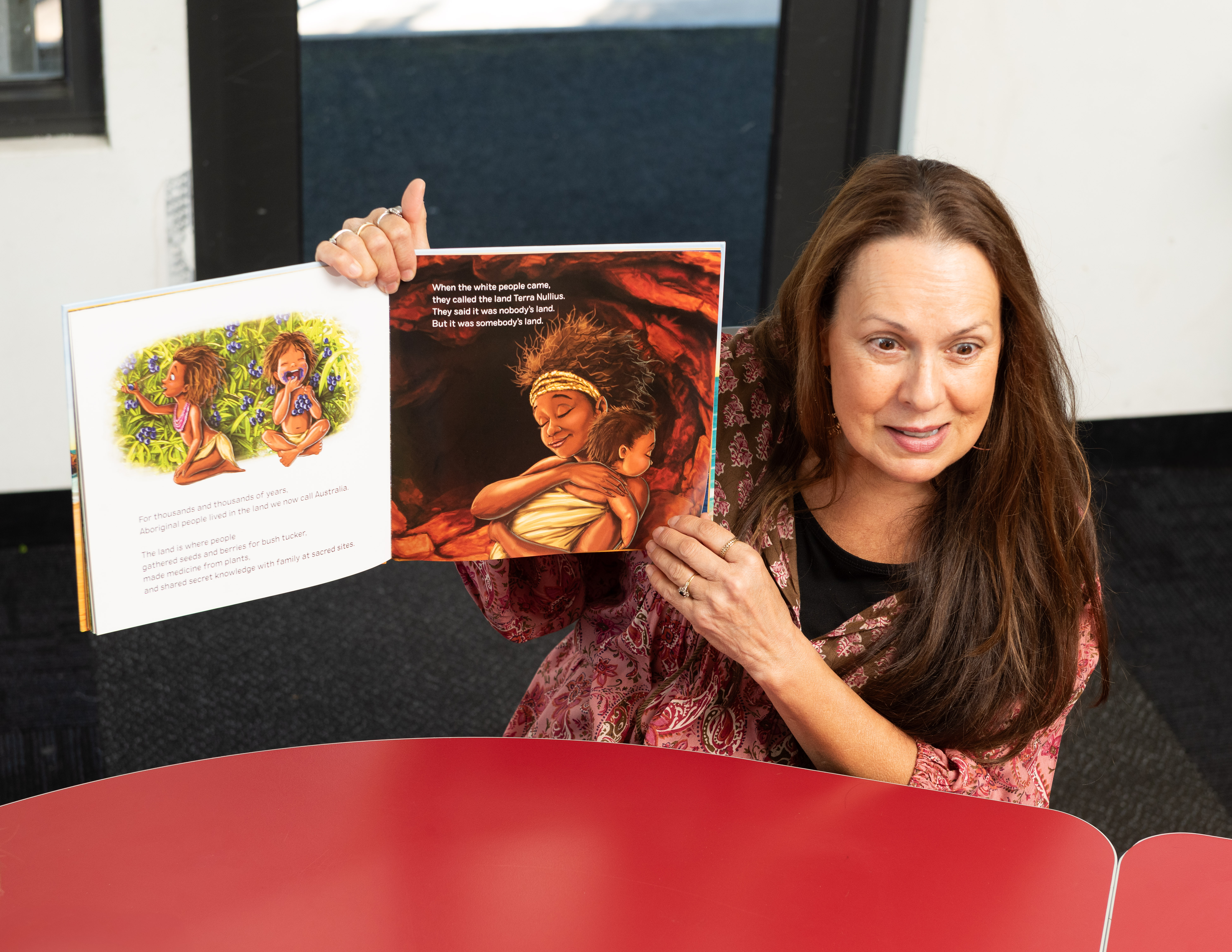
A study by Ledger and Merga (2018) found that many Australian primary school students appreciated being read to at school, and asserted that being read aloud to made the stories more enjoyable and engaging. This research also indicated that continued reading aloud beyond the early years can strengthen students’ connection to literature and sustain their reading motivation. This is obvious to any teacher in the library who has read aloud a snippet of a chapter book to an older year group and suddenly every student is eager to borrow it first!
A common mistake made by parents and teachers alike is that once students can read on their own, they no longer see a need to read to them. This couldn’t be further from the truth. Reading aloud benefits even the most confident of readers. Comprehension develops earlier when young readers are listening to a text as opposed to reading it (Trelease, 2019). This means students can understand complex language, ideas and content when listening more quickly than when reading independently. It also means that teachers who read aloud to their students can introduce new texts with enriched vocabulary, complex narrative structures and more mature themes, which in turn broadens students’ literary experiences and exposes them to books they may not be able to read independently.
Ultimately, reading aloud is a profoundly effective literary practice. It not only creates comprehension building blocks and strengthens language skills but also supports students at their reading level and continues to foster a love of reading. Most importantly, it creates a shared experience with other students about stories that have been made accessible to everyone, no matter their reading ability. As teacher librarians, it is imperative that we continue to read aloud to students of all ages. When reading aloud, we have the opportunity to ensure that every student has the chance to experience the joy, love, engagement and connection that books can provide.
References
Beck, I. L., & McKeown, M. G. (2001). Text talk: Capturing the benefits of read-aloud experiences for young children. The Reading Teacher, 55(1), 10–20.
Barone, C., Fougère, D., & Martel, K. (2024). Reading aloud to children, social inequalities and vocabulary development: Evidence from a randomized controlled trial. Journal of Research on Educational Effectiveness, 17(4), 746–769.
Fisher, D., Flood, J., Lapp, D., & Frey, N. (2004). Interactive read-alouds: Is there a common set of implementation practices? The Reading Teacher, 58(1), 8–17.
Ledger, S., & Merga, M. K. (2018). Reading aloud: Children’s attitudes toward being read to at home and at school. Australian Journal of Teacher Education, 43(3), 124–129.
Trelease, J. (2019). The read-aloud handbook (8th ed.). Penguin.
Victorian Department of Education and Training. (2022). Reading with children.

Serena Bourke
Teacher Librarian
Glendenning Public School